


Pond Inlet (Mittaatalik/ᒥᑦᑎᒪᑕᓕᒃ), Canada: August 21, 2026

Updated: Oct 3
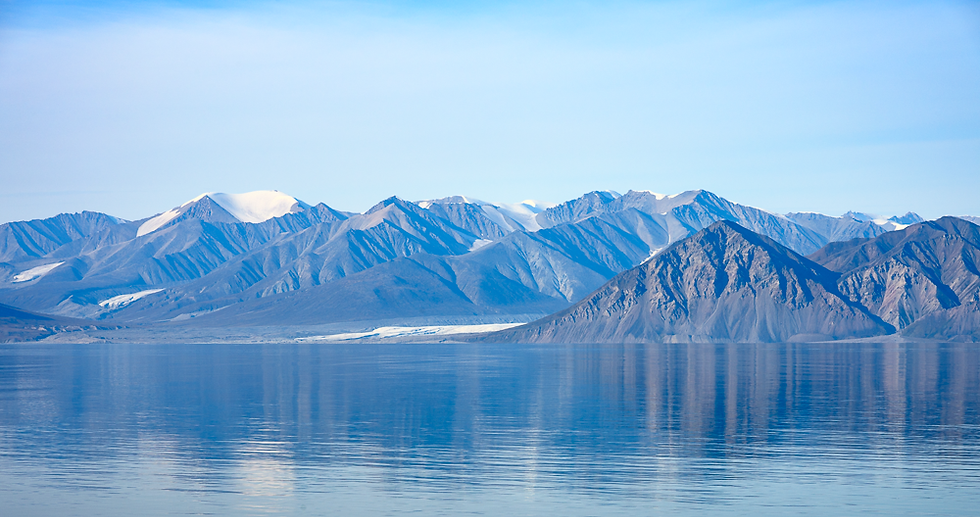
We were "at sea" for the prior two days sailing across the Davis Strait and are now on the Canadian side of Baffin Bay. Since leaving Greenland on August 18, we have lost three hours in time zone changes (-1 hour entering Baffin Bay, -1 hour Canadian side of Baffin Bay, and now -1 at Pond Inlet. On the crossing, the only thing I saw was a couple of icebergs.
The day we visited Pond Inlet/Mittaatalik the temperature was quite warm (too warm for muck boots and our winter jackets) and there wasn't a cloud in the sky.
Early explorers of the Northwest Passage named an inlet "Pond." The Hudson's Bay Company opened a trading post near the Inuit camp and named it Pond Inlet. Pond Inlet became a settlement in 1975. Local Inuit have always known this place as Mittaatalik which means "the place where Mittima is buried." Who Mittima was is a mystery.
Pond Inlet/Mittaatalik the largest community (about 1,800 residents) in northern Baffin Island is a traditional Inuit village (population about 1500). From the hamlet there are views of Eclipse Sound and the mountains of Bylot Island. Northern Baffin Island is part of the Arctic Cordillera with mountains visible from all sides. Pond Inlet/Mittaatalik is in the territory of Nunuvut.

Known for having one of the region's most inhospitable climates, winter temperatures average -30.8 ℃/-23.4 ℉ December to February. From November to January there is 24-hours of darkness November to January. They do have the most northerly Tim Hortons with coffee but it does not have donuts.
People survive by hunting, fishing, and trapping. Wildlife includes polar bears, caribou, wolves, Arctic foxes, ringed seal, and narwhals. During the summer, fish is dried and berries are preserved.
Most of the signs in Pond Inlet/Mittaatalik are bilingual meaning both the Latin alphabet and the Inuktitut alphabet are on signs.
At one of our first stops along our walk of Pond Inlet, we tasted bannock (a fry bread) and two volunteers explained how they used to make their homes with stones and sod laid into the earth. The roof was supported with bowhead whale bones.
Dan and I went to a Qulliq workshop (oil lamp) in Pond Inlet. The instructor, Elenor, showed us how to prepare the wicks and light the lamp. She was taught by her grandmother how to make oil lamps when she was 7 years old. The lamps were used for heat and for cooking. For cooking, two lamps would be placed between caribou antlers and the pot was set upon the caribou antlers or other pot support.
Traditionally, the lamps were made from soapstone, but soapstone came from some distance away. Now old frying pans, cut in half, are used in place of the soapstone. Traditionally oil from whale blubber or caribou fat was used; today's oil is usually canola (1.5 liter bottle costs about $13 CAD). The oil is poured into the lamp basin. Wicks are made from the Arctic cottongrass plant. Small clumps of arctic cotton soaked in oil are put in a line along the edge of the lamp. A lighter is used to light the first clump, then a Paqqit stick (shaped from any wood) is used to spread the fire to each wick clump. If the wick has sufficient oil, only the oil burns. The lamps are still used in winter and for celebrations.
We were treated to a cultural performance in the afternoon: drumming, throat singing, games they play like mimicking an animal’s walk (seal), lip pulling, making funny faces to make others smile and for entertainment during the darkest winter days.

The people who live in Pond Inlet/Mittaatalik were very welcoming and also enthusiastic about sharing their customs with us. We enjoyed the day.


Comments