


Gjoa Haven/Uqsuqtuuq: August 27, 2026


Gjoa Haven (pronounced Joe Haven) is a hamlet of about 1,500 people, mostly Inuit, in Nunavut. It is the only settlement on King William Island. Explorer Roald Amundsen spent two winters (1903-1904) here during his Northwest Passage expedition. Amundsen's ship was named Gjoa. He said that Gjoa Haven was the prettiest natural harbor he had ever seen. The Hamlet Office has a bronze bust of Amundsen.
Home to the Nattlik (people of the place where there is seal) Inuit, the community has been inhabited for thousands of years and is known for its traditional skills in hunting, fishing, and navigating the Arctic. The Inuit name for the hamlet is Uqsuqtuuq. They traditionally lived in one of the harshest, most demanding environments on Earth, spanning the Boothia Peninsula, King William Island, and the Pelly Bay area.
Continuing the Franklin expedition story: Both of Franklin's expedition ships, the HMS Erebus and HMS Terror, became trapped in heavy sea ice near King William Island in 1846. They were stuck in the ice for over one year. Franklin and twenty-four men died during this initial imprisonment. In April 1848, the 105 survivors abandoned the ships.
Thanks to modern sonar technology and traditional Inuit knowledge researchers located the wreck sites of HMS Erebus in 2014 and HMS Terror in 2016. The wrecks are National Historic Sites managed jointly by Inuit and Parks Canada. One of the sites is near Gjoa Haven at King William Island.
The exceptional Nattilik Heritage Centre has detailed exhibitions telling the story of the Franklin Expedition and Amundsen's Journey through the Northwest Passage. Additionally, there are heart breaking first-person accounts of survival in the harsh Arctic land.
The first event we went to was an "exhibition" Bingo Game at the Community Center. Each ship passenger paid an excursion fee in advance to participate. The rule is that if a ship passenger won the game, the money would be given to a local resident at his/her table. We were each handed a dabber to mark the squares as numbers were called. Our local table mates gave us instructions on how to play. Once the tables were full of players, the games began. There were two sheets of bingo games. The first one was “Lucky Seven” where the white squares made a “7”. No one at our table had a bingo for the first game.
The second game was a “diamond” where the white squares formed a diamond. One person at our table, HX passenger Mark, got the bingo. The two local women at our table were mother (Agnes Porter) and daughter Tracy (substitute school teacher). Mark was handed the envelope of cash and passed it to the women who split it. We all thoroughly enjoyed the game, and it was a perfect way to meet people of Gjoa Haven.
While waiting for the room to fill and the game to begin, I wandered around. I met Mary in the kitchen. She was preparing food for the afternoon cultural event. She had pans of fresh Arctic Char that she layered into a pan and spread with a mayo-bread crumb-herb topping. Someone else was making caribou stew, a vegetarian soup, and bannock. Arctic Char is plentiful right now.
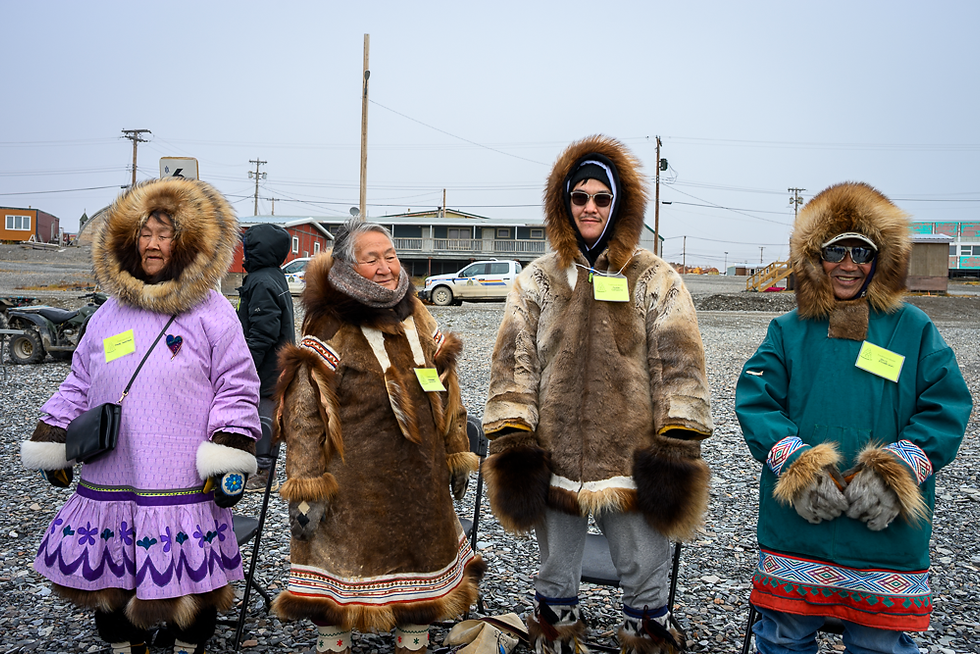
The afternoon cultural show began with an elder explaining the Quilliq (soapstone lamp). This was followed by a throat singing performance. The first song was “mosquito.” They mimicked the sound exactly. Square Dancers were next. The jigging was picked up from non-native visitors and adapted.
Next: Sea days then Cambridge Bay community


Comments