


Ancient Cities of Samarra & Hatra, Iraq: November 8, 2025
- Cecilia Clark

- Nov 29, 2025
- 3 min read
Updated: May 14

Leaving Baghdad for the last time, we drove north through areas once occupied by Daesh (ISIS) to the ancient city of Samarra. At first sight, the most interesting feature is the 1,000 year old spiral minaret and the walls of the ancient mosque. The mosque and tower were completed in 851 CE. Shortly after the founder was assassinated in 861, the court abandoned the area and fled to Baghdad. The Great Mosque was destroyed in 1259 CE. Although restoration efforts began in 1956, it sustained additional damage in 2005 from insurgents, the US invasion of Iraq, and sectarian violence. Further damage was incurred when Daesh attacked the area on the 4th and 5th of June 2014. Bullets lodged in some of the 1,000 year-old walls remain as evidence of 21st century battles. Eighty percent of the archaeological site remains unexcavated. It became a UNESCO World Heritage site in 2007.


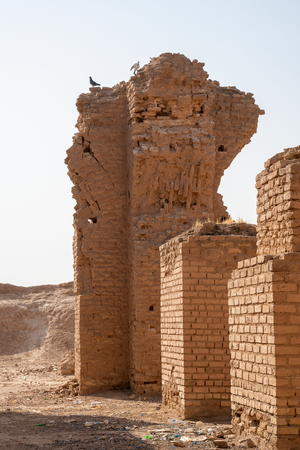
The ruins were empty except for a guard from the Popular Mobilization Forces (PMF) and a family that suddenly strolled into the ruined mosque. They allowed us to take their photo.

Later in the day we arrived in the ancient city of Hatra, the city of the Sun God, located in Ninevah Province in Northern Iraq. Hatra flourished in the 1st and 2nd centuries CE as a religious and trading center on the Silk Road. It was destroyed and deserted in the 3rd century.
Hatra was the site for the opening scene of the Exorcist (1973). In 1985 Hatra became a UNESCO World Heritage Site. Daesh (ISIS) occupied this ancient city beginning in mid 2014 turning it into a training ground because they believed the US forces wouldn't bomb this UNESCO Heritage site. Using sledgehammers and guns Daesh destroyed stonework depicting "graven images" and said it would begin bulldozing the ruins. The pro-Iraqi government Popular Mobilization Forces captured the city on April 26, 2017. At that point the walls of Hatra were still standing although there were bullet holes everywhere and smashed statuary. The ground is littered with bullet shell casings.
The first photo is of Temple of Maran a main sanctuary dedicated to Maran (“Our Lord”), often linked with the sun god Shamash. The Temple of the Triad (second photo) is dedicated to a triad of deities, commonly identified as Maran, Atargatis, and Nergal. Atargatis was a Syrian goddess of fertility, water, and love, often depicted as a mermaid. Nergal was the Mesopotamian god of war, death, plague, and the underworld.


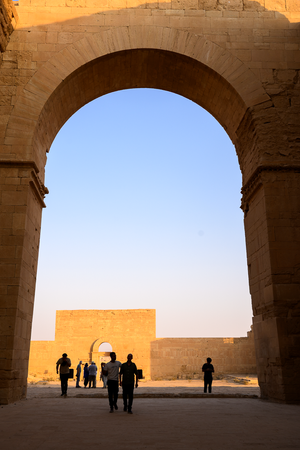
The following are photos of details that captured my eye at Hatra:
A camel nursing her baby and an interior archway with a horizontal frieze of camels. One camel in the line seems to be a Bactrian Camel with a double hump. The Bactrian camel is native to the steppes of Central Asia, while the single-humped, Dromedary camel is native to the Arabian Peninsula.


Possibly the image of Poseidon and decorative dragons on a rooftop cornice.


The heads installed perpendicular to the temple wall are a reminder that you are entering a holy space and that you should bow your head and be respectful. The writing is Aramaic. In the 1st and 2nd centuries, Hatra was ruled by a dynasty of Arabian princes whose written language was Aramaic.


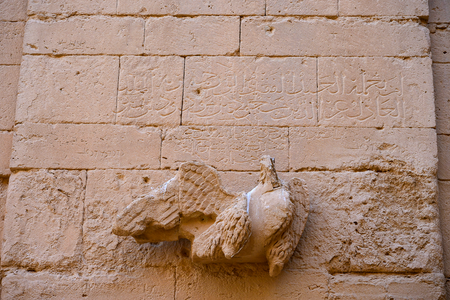
The eagle was the symbol of Hatra. In one of the huge temples multiple eagle sculptures were installed high up and around the room in the temple.They represented the eyes of the gods and they were watching. The writing may be cunieform instead of Aramaic (I don't recall) in the below photo. Daesh (ISIS) disfigured them. A mutilated statue of the sun god Shamash.



We walked around Hatra for about 2 hours enjoying the view and listening to Mahdi's tour of the site. We were allowed to climb to the rooftops of two of temples to enjoy the sunset.


Leaving Hatra behind we drove 90 minutes to Mosul the capital of Ninevah Province.
Tomorrow we begin exploring Mosul.


Comments